Freezer
Ice Cream Soft While the Sub-Zero Display Reads Zero
In the owner's words
The panel says zero, same as it always has, but the ice cream scoops like soft-serve and a bag of peas bends in my hand instead of snapping.
Short answerA zero on the display only tells you what the freezer's own sensor believes. When ice cream stays soft beside that number, what we usually find is frost choking the air over the coil, a sensor reading wrong, or a condenser too dusty to shed heat. Sub-Zero Appliance Repair Seattle, (206) 339-4211, compares the food temperature with the panel first.
Signed
- Technician
- Dean Halvorsen
- Bench time
- 19 years in the trade
- Title
- Refrigeration technician — sealed systems and airflow
- Carries
- EPA 608 certified
- Dated
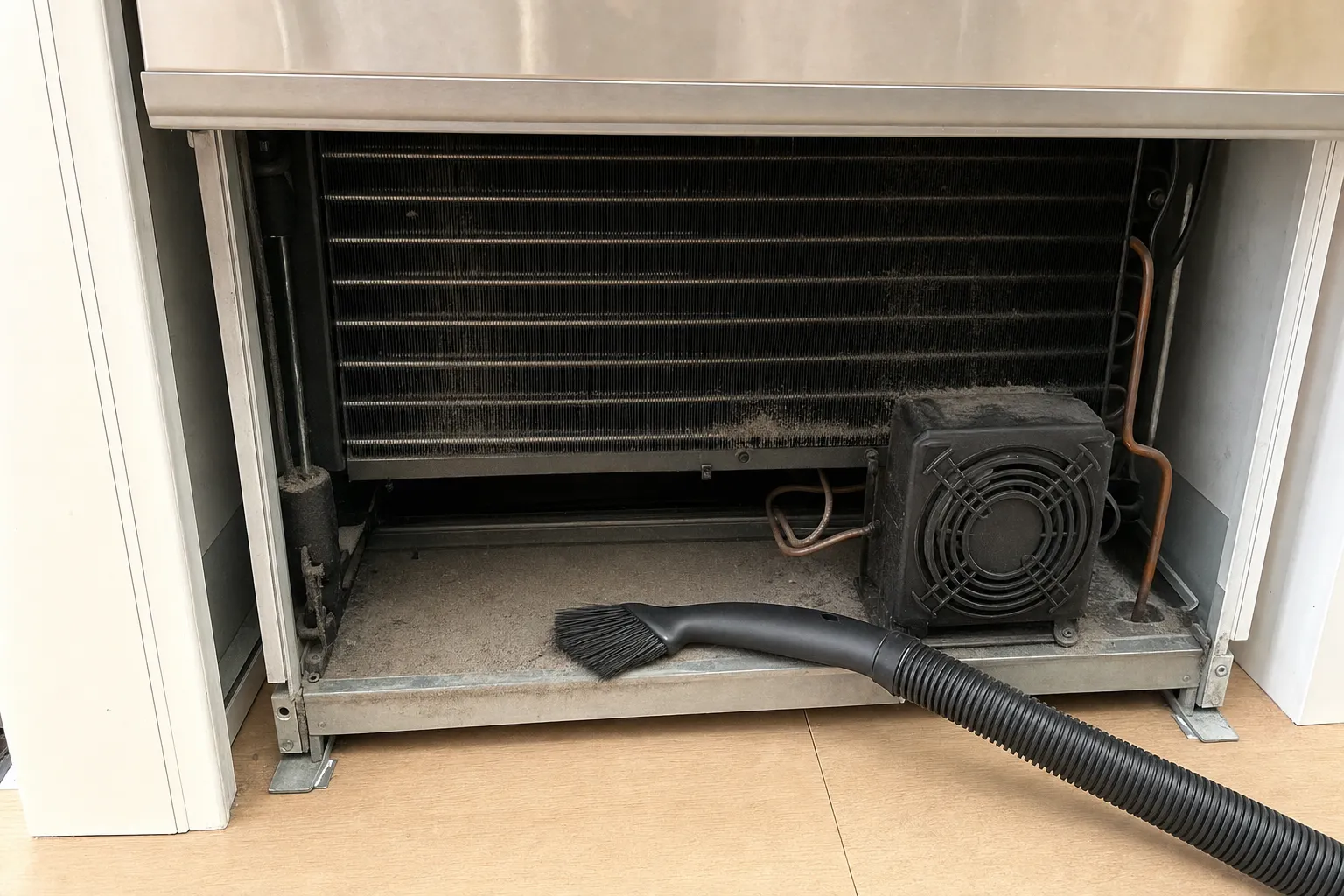
- Condenser coil
- Condenser fan
- Lint and dust
Pattern Ledger
Soft Ice Cream at Zero: how it usually goes
- Most often Frost narrowing the air path over the freezer coil
-
Gives itself away by Soft food on the upper shelves and door first, only a faint draft from the vents, and hard frost behind the rear panel
Price band Defrost heater, thermostat or sensor$260–$690
- Sometimes Compartment sensor misreading the freezer temperature
-
Gives itself away by A thermometer left among the frozen food reads ten degrees or more away from what the panel shows
Price band Defrost heater, thermostat or sensor$260–$690
- Rarely Freezer's sealed system losing capacity
-
Gives itself away by Clear coil, fan moving air, clean condenser, and the compressor still runs long without pulling the freezer down
Price band Compressor or sealed-system repair$1,410–$3,350
Telling these three apart is what the $89 visit is for. Sub-Zero Appliance Repair Seattle · (206) 339-4211
The number is the sensor’s view
The display shows what a thermistor in the freezer compartment measures, not what the food has reached. Sub-Zero’s service manual for the classic 600-series built-ins treats a gap of ten degrees or more between product and display as the mark of a misreading compartment thermistor. Smaller gaps usually come from where the food sits: door shelves and the front edge warm with every opening.
Air comes before parts
In Seattle kitchens, soft ice cream under a steady zero is most often an air problem. Frost on the coil behind the rear panel narrows the path the fan pushes through, so the cold stays at the coil while the shelves drift warm. A condenser furred with lint makes the system work harder for less cold. We check both, and measure the food against the panel, before anything else.
What you can check safely
- Confirm the freezer set point is where you left it; Sub-Zero recommends 0°F for the freezer, the factory setting on electronic panels.
- Leave an appliance thermometer among the frozen packages in the middle of the freezer for several hours with the door shut, then compare it with the display.
- Look at the condenser grille; if lint is matted across it, Sub-Zero's own troubleshooting asks whether the condenser was cleaned within the past three months.
Owner checks end there. Sealed tubing, wiring behind the grille and anything held by screws belongs on a service call — Sub-Zero Appliance Repair Seattle, (206) 339-4211.
Questions owners ask about this
Why is only the ice cream soft when the meat and vegetables are still hard?
Sugar and fat keep ice cream from freezing solid, so it softens a few degrees before other food shows any change. That makes it the earliest warning a freezer gives. If it stays soft for more than a day with the door closed, the freezer is running warmer than its display admits.
Should I turn the freezer colder until the ice cream firms up?
It can hide the problem for a while, but on a misreading sensor or a frosting coil it rarely holds, and it makes the compressor work harder. Leave the set point at 0°F, measure with a thermometer, and ring Sub-Zero Appliance Repair Seattle on (206) 339-4211 with both numbers in hand.
Can the freezer be warm with no SERVICE warning on the panel?
Yes. The service manual for the classic 600-series built-ins lists warm-freezer causes both with and without a flashing SERVICE indicator, among them a door held ajar, a dirty condenser and a sensor misreading. A quiet panel does not clear the appliance; a thermometer among the food is the better witness.