The whole cabinet: power, noise, water
Water on the Floor in Front of a Built-In Sub-Zero
In the owner's words
Most mornings there is a puddle on the floor in front of the refrigerator. I wipe it up, it comes back, and I cannot see where it starts.
Short answerWater in front of a built-in Sub-Zero usually comes from one of two places: the household supply feeding the ice maker and filter, or defrost meltwater that has missed its drain. Where and when it collects tells you which. Sub-Zero Appliance Repair Seattle, (206) 339-4211, traces the path before any part is ordered.
Signed
- Technician
- Dean Halvorsen
- Bench time
- 19 years in the trade
- Title
- Refrigeration technician — sealed systems and airflow
- Carries
- EPA 608 certified
- Dated
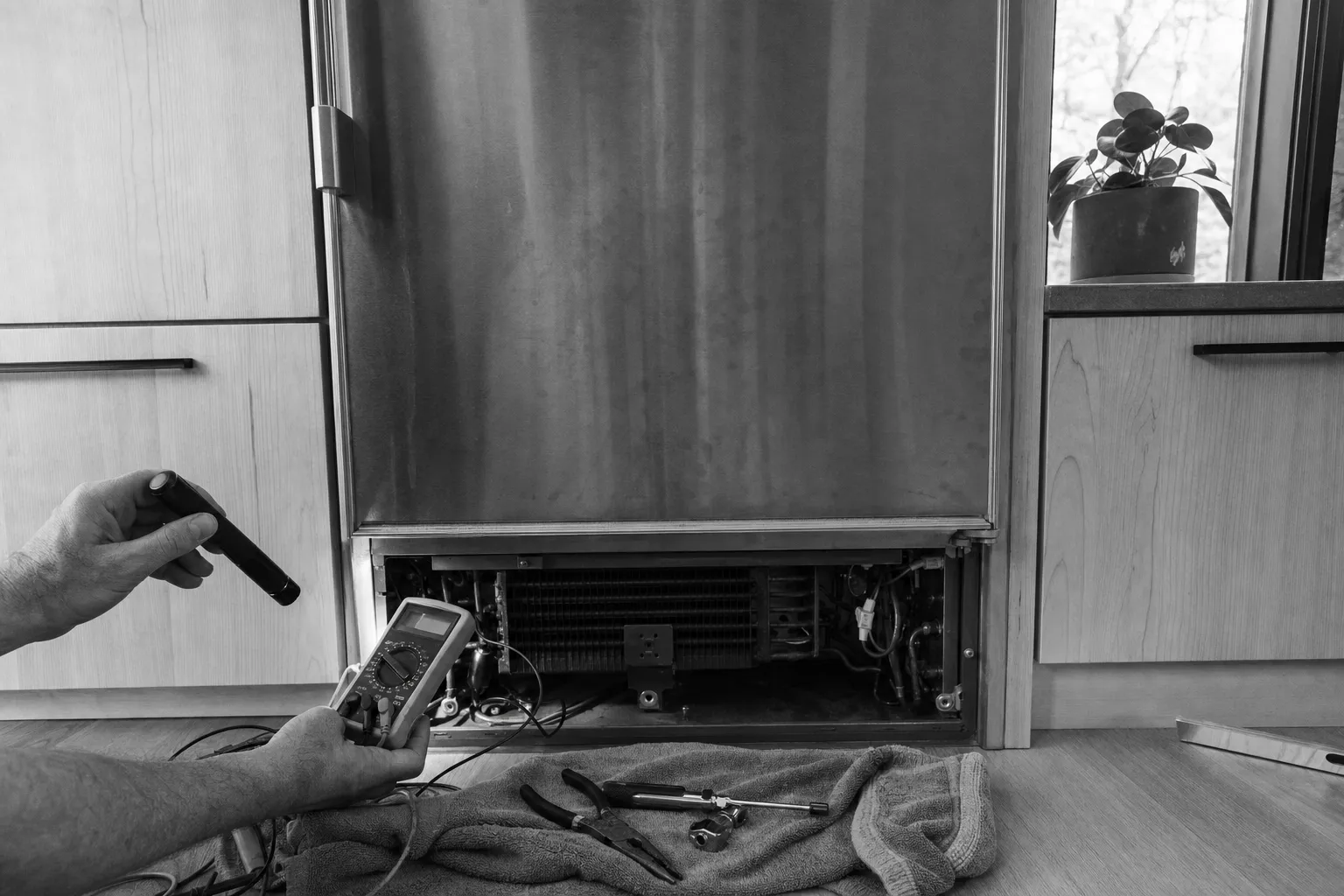
- Condenser
- Flashlight
Pattern Ledger
Water on the Kitchen Floor: how it usually goes
- Most often Supply connection, water valve or filter leaking
-
Gives itself away by Clean water that keeps coming with the doors shut, wettest near the kickplate
Price band Ice maker, water valve or supply line$270–$750
- Sometimes Defrost drain tube blocked, water escaping forward
-
Gives itself away by Water or ice under the crisper drawers or along the door gasket before any reaches the floor
Price band none set for this work — quoted after the diagnosis
- Rarely Drain pan cracked, out of level or overfilling
-
Gives itself away by Water under the unit after defrost periods, while the supply fittings and filter stay dry
Price band none set for this work — quoted after the diagnosis
Telling these three apart is what the $89 visit is for. Sub-Zero Appliance Repair Seattle · (206) 339-4211
Two kinds of water
A built-in handles water in two directions. Pressurized water comes in through a supply line to a valve that feeds the ice maker, the filter and, on some models, a dispenser. Meltwater from each defrost runs the other way, down a drain tube to a pan in the machine compartment. A leak on the supply side keeps coming with the doors shut; a leak on the drain side arrives in waves after defrost, and often shows up inside the cabinet first.
What we usually find
On units that have been moved or reconnected, the household connection is the first suspect, because it is the part that was disturbed. On cabinets that have stood in one place for years, a drain tube slowly choked with debris is more common, and Sub-Zero names a clogged drain tube when water turns up on the door, hinge or gasket. We shut off the water, take off the kickplate, dry everything and watch; the first fresh drop usually names its source.
What you can check safely
- Shut the household valve that feeds the unit, then watch over the following day whether the puddle still returns.
- Check the water filter housing; a few drops during a filter change are normal, but a seated genuine cartridge should stay dry.
- Look under the crisper drawers and along the bottom of the door gasket for water or ice.
- Dry the floor fully and lay paper towels along the front, so the first wet spot shows where it starts.
Owner checks end there. Sealed tubing, wiring behind the grille and anything held by screws belongs on a service call — Sub-Zero Appliance Repair Seattle, (206) 339-4211.
Questions owners ask about this
Can I take the kickplate off to look?
Sub-Zero's own leak steps include shutting off the water to the unit and removing the kickplate, usually held by a few screws. Look rather than reach in, since the water valve and electrical parts share that space. If a valve or fitting is wet, Sub-Zero Appliance Repair Seattle, (206) 339-4211, takes it from there.
How do I know if it is the plumbing or the refrigerator?
Sub-Zero draws the line itself. A leak at the household connection or the line into the unit is a plumber's job; a leak from the water valve, the drain pan or inside the cabinet is appliance work. Shutting the supply off and watching what happens next usually shows which side it is on.
Should I keep using the ice maker while it leaks?
Not until the source is known. With the supply shut off, the ice maker cannot refill, which is the point: a fill or dispenser fault stops feeding the puddle. The food stays cold meanwhile, because the refrigeration does not depend on the water supply at all.