Freezer
Frost Sheet on the Back Wall of a Sub-Zero Freezer
In the owner's words
There's a white crust across the back of the freezer that gets thicker every week, and the vents are half buried in it now. The shelves are cold, just not like they were.
Short answerA little frost after the door has stood open can happen; a solid white sheet across the back wall is a different matter. On a Sub-Zero it usually means the automatic defrost has stopped clearing the coil, or damp air is getting in past the door. Sub-Zero Appliance Repair Seattle, (206) 339-4211, works out which before anything is replaced.
Signed
- Technician
- Dean Halvorsen
- Bench time
- 19 years in the trade
- Title
- Refrigeration technician — sealed systems and airflow
- Carries
- EPA 608 certified
- Dated
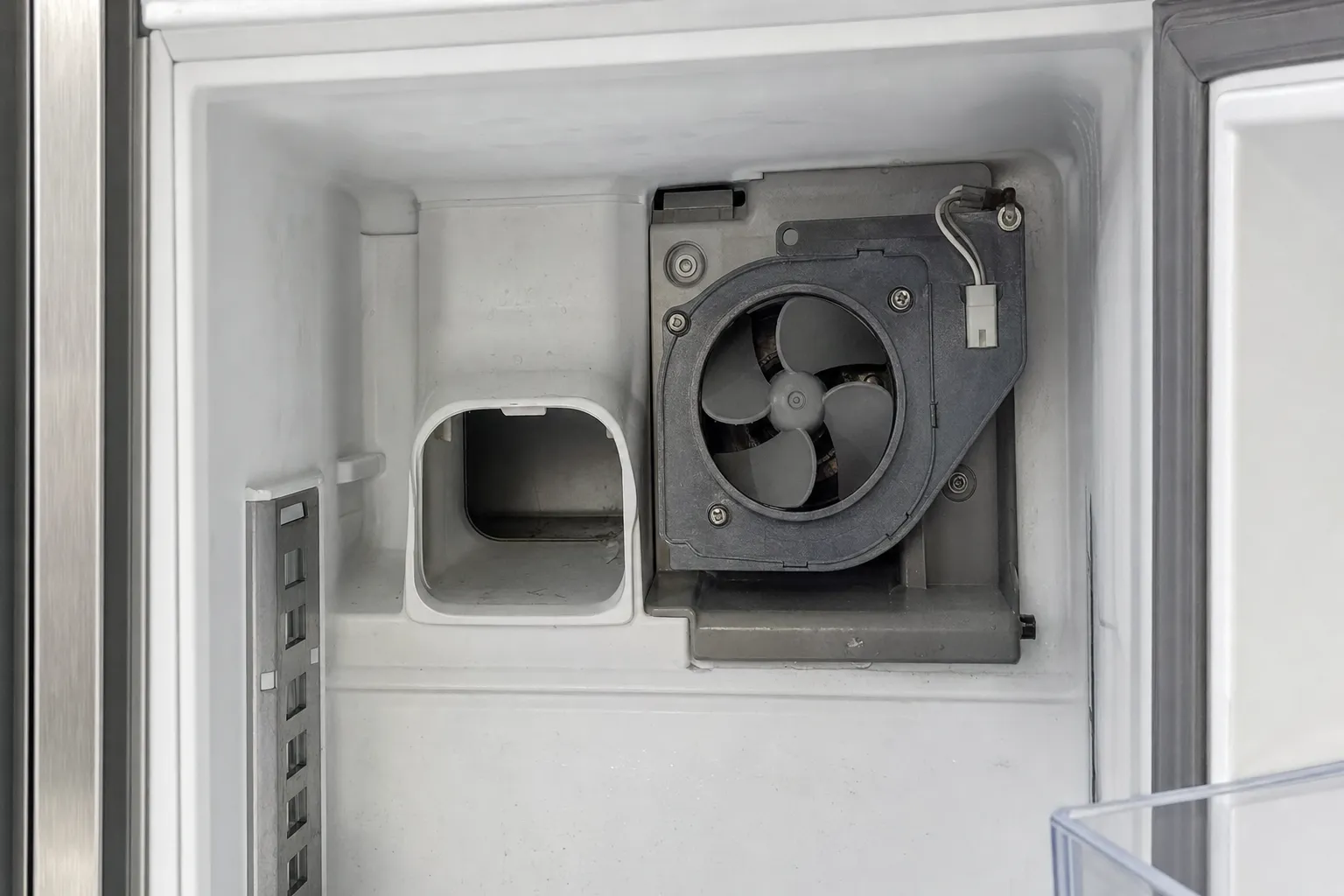
- Evaporator fan
- Air opening
- Vent panel
Pattern Ledger
Frost on the Freezer Wall: how it usually goes
- Most often Defrost heater, terminator or drain trough heater has failed
-
Gives itself away by Even, dense frost over the whole back wall that returns within days of a manual defrost
Price band Defrost heater, thermostat or sensor$260–$690
- Sometimes Torn gasket or a door held off its seal
-
Gives itself away by Frost is heaviest toward the door edge or on the front packages, and the door ajar bell sounds more than it used to
Price band Door gasket or seal replacement$290–$640
- Rarely Ice maker not filling properly
-
Gives itself away by Frost and ice gather around the ice maker and bin, and the cubes come out stuck together in clumps
Price band Ice maker, water valve or supply line$270–$750
Telling these three apart is what the $89 visit is for. Sub-Zero Appliance Repair Seattle · (206) 339-4211
How frost is meant to leave
Each time the door opens, damp kitchen air comes in and its water freezes onto the evaporator coil behind the rear panel. On the classic Sub-Zero built-ins a heater under that coil melts the build-up at intervals, a terminator ends the heat once the coil has warmed, and the water runs away through a heated drain trough. On the 600-series built-ins only the freezer side carries these parts, and when one stops, the frost has nowhere to go.
Reading the sheet before it melts
An even crust over the whole back wall, thick enough to bury the vents, points at the defrost circuit. A heavy band toward the door, or frost furring the front packages, points at air getting in around the seal. Sub-Zero also lists a frozen drain tube and an ice maker that fills badly, and each leaves its own pattern. The service manual then has the technician test each heater and the terminator, and start a defrost by hand to watch the circuit respond, before the control is suspected.
What you can check safely
- Check the set point: Sub-Zero recommends 0°F on electronic controls, or a setting between 4 and 6 on the older dial controls.
- Run your eye around the door gasket for rips, cracks, flattened stretches or a corner that stays curled away from the cabinet.
- Make sure no basket or package stops the door or drawer short; pulling a drawer fully out and closing it again lets it seat on its track.
Owner checks end there. Sealed tubing, wiring behind the grille and anything held by screws belongs on a service call — Sub-Zero Appliance Repair Seattle, (206) 339-4211.
Questions owners ask about this
Can I defrost the freezer myself to clear the frost?
Sub-Zero does describe a manual defrost: food out, towels down, door open for several hours, then a day to return to temperature. On Classic and Designer models that means switching the whole unit off. It clears the ice, not its cause. If a solid sheet comes back, ring Sub-Zero Appliance Repair Seattle on (206) 339-4211.
Why does melting the frost make the repair harder to diagnose?
The shape of the frost is evidence. An even sheet over the whole coil points at the defrost parts, while a heavy band near the door points at the seal. Once it has melted, the technician either waits for it to rebuild or tests every part without the clue it left behind.
Does heavy frost on the back wall mean the compressor is failing?
Rarely. Heavy frost means the cooling side is still making cold and the clearing side has stopped keeping up, which sends the search to the defrost parts and the door seal. A sealed-system fault tends to show as a weakly cold coil rather than one buried under a thick, even sheet.